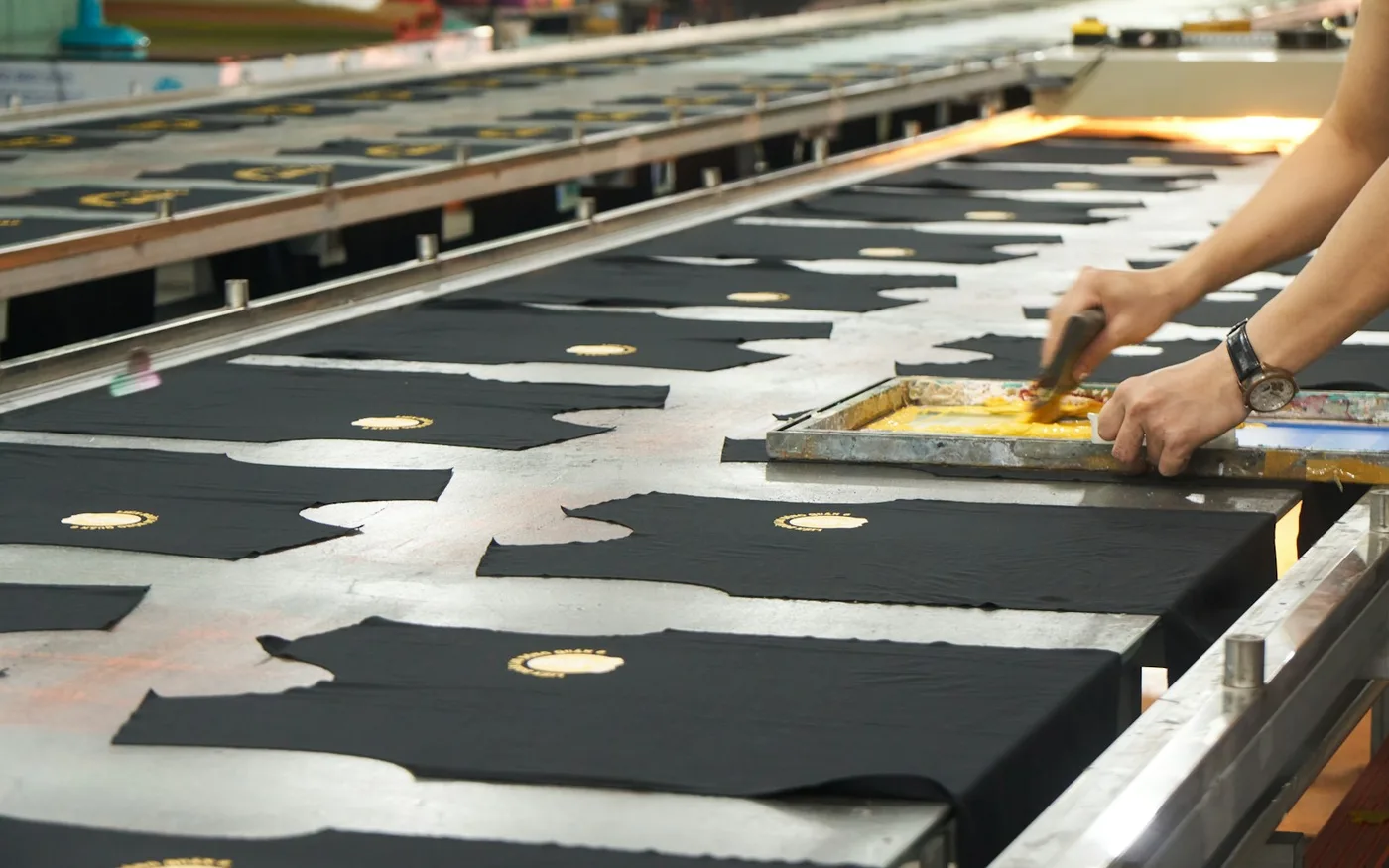
Part one: why this is a business worth entering
There are four reasons t-shirts are a better category for a small operator than most things people suggest instead — candles, phone cases, supplements. None of them are about passion. All of them are structural, and that is what makes them reliable.
1. The category is enormous, and still growing
The global t-shirt market was estimated at around $29.7 billion in 2024 (QYResearch). That figure alone is not the interesting part — a lot of big markets are also mature and closed. The interesting part is what is happening inside it: the segment that serves small sellers is growing at a rate that is unusual for a category this old.
The print-on-demand ecosystem — the platforms, software and fulfilment networks that let an individual sell a shirt without holding stock — was valued at $11.76 billion in 2025 and is forecast to reach$84.7 billion by 2034, a 24.53% compound annual growth rate (Straits Research). Within that market, customizable apparel is the largest product category at 41.72%, and North America holds 38.64% of it. 83.69% of it sells online.
| Metric | Value | Year | Source |
|---|---|---|---|
| Global t-shirt market | ~$29.7 B | 2024 | QYResearch |
| Print-on-demand market | $11.76 B | 2025 | Straits Research |
| Print-on-demand market (forecast) | $84.70 B | 2034 | Straits Research |
| Print-on-demand CAGR | 24.53% | 2026–34 | Straits Research |
| Customizable apparel share of POD | 41.72% | 2025 | Straits Research |
| North America share of POD | 38.64% | 2025 | Straits Research |
| Online share of POD channel | 83.69% | 2025 | Straits Research |
| Corporate apparel share of branded merchandise | 61.46% | 2025 | Straits Research |
Market-research firms disagree with each other by wide margins on definitions like "print on demand", so treat these as direction, not gospel. What is consistent across sources is the direction: high-teens to mid-twenties growth in the on-demand apparel segment, and North America as the largest single buyer.
2. It is a high-frequency product, which almost nothing else in apparel is
This is the point most guides miss, and it is the one that matters most to a small operator. Compare how often a customer buys each thing:
| Product | Typical repurchase gap | Why |
|---|---|---|
| T-shirt | 3–12 months | Wears out, stains, changes size, gets lost, new design, new team, new event |
| Hoodie | 2–4 years | Durable, seasonal, one is enough |
| Jacket / outerwear | 3–7 years | High price, low replacement rate |
| Shoes | 1–3 years | Wear-driven but expensive, sizing risk |
| Accessories | 1–5 years | Low intent, impulse-driven |
A t-shirt is the only garment that is simultaneously cheap enough to buy on impulse, durable enough to trust, and disposable enough to replace. For a business, that means three separate revenue engines from one product: the repeat customer who replaces, the group order that buys thirty at once, and the gift buyer who never repeats but buys twice a year.
The practical consequence: a t-shirt customer is not a one-time transaction, they are a 3–12 month subscription that nobody calls a subscription. That is why the first order should be sized for the second order, not the first.
3. The unit economics are unusually forgiving
A blank cotton tee costs a few dollars and retails for twenty-something. That gap is what pays for everything else. Compare the same money put into other "easy" product categories:
| Category | Cost per unit | Typical retail | Gross multiple | Hidden burden |
|---|---|---|---|---|
| Printed t-shirt | $5–7 | $26–32 | ~4.5× | Sizing risk |
| Scented candle | $6–9 | $28–36 | ~4× | Fragile, heavy, melt risk in summer |
| Phone case | $2–4 | $18–25 | ~6× | Model mismatch; buyer replaces the phone, not the case |
| Skincare | $4–8 | $32–48 | ~6× | Regulation, expiry, liability, insurance |
| Supplement | $6–10 | $35–50 | ~5× | Heavy regulation, health claims, refunds |
| Ceramics / homeware | $8–15 | $35–55 | ~3.5× | Breakage in transit, heavy freight |
Phone cases and skincare have better gross multiples. They also have something t-shirts do not:regulatory exposure, expiry dates, liability, and a fixed model number that expires. A blank t-shirt has none of these. It does not melt, cannot be broken in transit, does not expire, needs no licence, weighs under 300 grams, and the "model" (a cotton crew neck) has not changed in fifty years.
That is the unglamorous reason this category works: the failure modes are limited and known.The only serious one is buying the wrong sizes.
4. There are three demand pools, and they do not dry up together
A business with one customer type is fragile. T-shirts have three, and they behave differently across the economic cycle — which smooths your year.
| Pool | Who | Typical order | Why it does not disappear |
|---|---|---|---|
| Corporate / uniform | Shops, cafés, gyms, trades, offices | 20–200 pcs, repeats annually | Staff turnover and rebranding never stop. Corporate apparel is 61.46% of all branded merchandise. |
| Event / team / club | Schools, sports clubs, charities, conferences | 30–500 pcs, one-off but constant | There is always another season, another event, another intake. |
| Brand / DTC | Independent labels, creators, small retailers | 100–600 pcs, seasonal drops | New brands launch continuously; the barrier to a first drop is low. |
Corporate orders shrink in a downturn before the others; brand drops are the first thing an independent founder cuts when money is tight. But teams, schools and events keep buying, because a season is a season. In practice this means a business built on two or three of these pools has a much flatter year than one built on a single customer type.
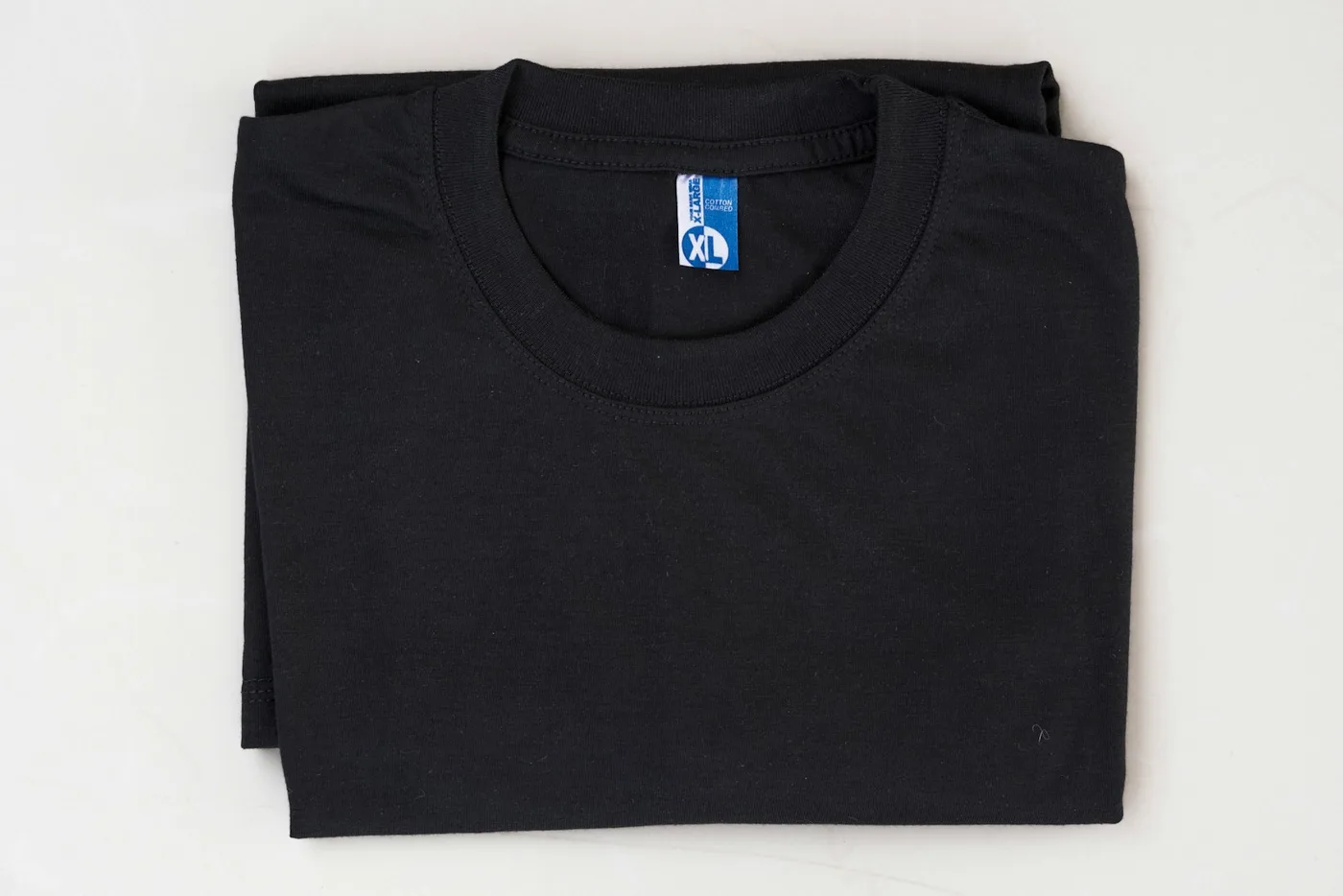
Part two: where the money actually sits
A $28 printed t-shirt is not one business, it is four, and each one has a different margin. Understanding this table is the difference between "I sell shirts" and "I know which part of this chain I am competing in".
| Stage | Who does it | Per shirt on a $28 tee | Share of retail | Capital needed |
|---|---|---|---|---|
| Fabric and blank | Mill / blank supplier | $3.55–3.90 | 13–14% | Very high (factory) |
| Decoration | Printer | $1.10–1.60 | 4–6% | Low (one press) |
| Label and packaging | You or a supplier | $0.30–0.90 | 1–3% | Low |
| Photography, site, marketing | You | $2–5 | 7–18% | Low but ongoing |
| Channel fee | Platform | $0.30–2.50 | 1–9% | None |
| Fulfilment and returns | You | $1–3 | 4–11% | Low |
| Your gross margin | You | $13–19 | 46–68% | Inventory |
Two things follow from this. First, the blank is not where your margin lives — arguing a supplier down by $0.20 changes your margin by less than one percentage point. Second,the decoration choice moves more money than the blank choice: screen printing at $1.35 versus DTG at $4.80 is $3.45 a shirt, roughly ten times the saving you could ever negotiate on the blank.
Which is why the people who lose money in this business almost never lose it on the blank. They lose it on pricing too low, printing the wrong method, and buying a size curve that strands stock.
Part three: three honest scenarios
Same shirt — 230gsm cotton crew, one-colour front print, sold direct at $28 — at three different order sizes. Goods cost includes blanks, extended-size loading, inbound freight, screen setup and printing.
| 100 pieces | 300 pieces | 600 pieces | |
|---|---|---|---|
| Blank price per piece | $3.90 | $3.70 | $3.55 |
| Total goods cost | $604 | $1666 | $3187 |
| Revenue if all sell at $28 | $2800 | $8400 | $16800 |
| Platform fees (3.2%) | $90 | $269 | $538 |
| Gross profit | $2106 | $6465 | $13075 |
| Profit per shirt | $$21.06 | $$21.55 | $$21.79 |
| Cash needed before first sale | $$604 | $$1666 | $$3187 |
Read the last two rows together. Going from 100 to 600 pieces improves profit per shirt by$$0.73 — real, but it multiplies the cash you must risk by six. That is the whole argument for starting at 100: not because 600 is worse, but because you cannot yet prove you will sell 600.
These are modelled figures, not promises. They exclude advertising, returns, your own time and taxes. At a 10% return rate and $4.50 shipping per order, expect the profit per shirt above to drop by roughly $1.50–2.00.

Part four: the four ways to get blanks, compared
Before you decide which supplier to use, decide which route to use, because they are not interchangeable. The same person can be best served by a POD platform at 20 shirts and by a China production run at 5,000, and badly served by both in between.
| Route | Real minimum | Price per blank | Lead time | Paperwork | Best for |
|---|---|---|---|---|---|
| POD platform | 1 | n/a — you buy a finished printed shirt at $12–18 | 3–7 days to customer | None | Testing designs with zero cash. Never for margin. |
| US distributor S&S, SanMar, regional | 1 case (typically 12–72 pcs) | $3.2–5.0 | 1–4 days | Resale certificate / business account | Established decorators with volume and an account. |
| China direct factory production run | 500–3,000 pcs per style and colour | $1.9–3.2 FOB | 25–45 days + 30–40 days ocean | Importer of record, duty, customs broker | Proven designs, 1,000+ units, a plan for the cash being in transit. |
| China stock, shipped locally what we run for first orders | 100 pcs | $3.0–7.3 | Days, not months | None to start | The gap: more than a case, less than a container, no account required. |
The gap in the middle of that table is the whole reason this business has room for anyone new. Below 100 pieces the POD platform is the only sensible option and the margin is gone. Above 1,000 pieces the container price wins and the paperwork starts. Between those two numbers — where almost every first brand actually lives — the options are a distributor account you may not be able to open, or paying retail. That middle is where a 100-piece order at a real blank price matters.
Prices in the table are ranges observed in 2026 across public listings and quotes; your actual price depends on weight, colour, quantity and destination. The point of the table is the shape, not the exact figures.
Part five: the case against, honestly
If a supplier tells you this business has no downsides, they are selling, not advising. There are four real problems, and each one has a specific defence.
| Risk | How bad it actually is | Defence |
|---|---|---|
| Almost no barrier to entry | Anyone can buy 100 shirts tomorrow. Price competition is permanent, and the cheapest seller is usually losing money. | Do not compete on price. Compete on a design, an audience, or a service (speed, size range, local delivery). |
| Inventory risk | A wrong size curve converts cash into boxes. This is the single most common failure. | Buy an uneven curve, depth in M/L, and refuse to buy more than 30% of any one size. |
| Returns and sizing complaints | Apparel returns run 5–15%. Each return costs you the outbound shipping and often the shirt. | Put a size chart in the images, not the description; state the fit in cm and inches; charge for shipping rather than build it invisibly into the price. |
| Platform dependency | One algorithm change or account suspension can remove most of your revenue overnight. | Own the email list from day one. A list of 500 buyers is the only asset a platform cannot take. |
There is a fifth risk that people do not put in tables: this is a boring business. It is ordering, counting, packing, and answering the same question about sizing forty times. The people who last are not the most creative; they are the ones who can do the unglamorous parts repeatedly.
Part six: the monthly maths nobody puts on a landing page
The order maths tells you whether one drop works. The monthly maths tells you whether the business works. They are different questions, and the second one is the one that decides whether you are still here in month six.
| Monthly cost | Lean start | Comfortable | Notes |
|---|---|---|---|
| Store / platform | $0–5 (Etsy fees only) | $39 (hosted store) | Etsy costs nothing until you sell |
| Domain + email | $2 | $10 | Annual cost divided by twelve |
| Marketing | $0 | $200 | Content and local outreach cost time, not cash |
| Market stalls | $0–120 | $240 | One or two weekends a month |
| Packaging and postage consumables | $20 | $60 | Mailers, tape, labels, printer ink |
| Samples and replacements | $15 | $40 | Someone will get the wrong size |
| Total per month | ~$40–160 | ~$590 |
Now the other side. At a $14 profit per shirt, covering $160 a month needs 12 shirts a month. Covering $590 needs 43. That single number — shirts per month to break even on overhead — is a far better business plan than any forecast, because you can check it every month.
| Profit per shirt | Shirts/month for $160 overhead | Shirts/month for $590 overhead | Shirts/month to pay yourself $1,000 |
|---|---|---|---|
| $8 | 20 | 74 | 145 |
| $14 | 12 | 43 | 84 |
| $20 | 8 | 30 | 59 |
Read across the $8 row and you can see why the price decision dominates everything else in this business. Halving your margin doubles the shirts you must sell, which doubles the marketing, the packing and the customer questions — for the same money.
Three positions, and only three
Every t-shirt business that survives picks one of three positions. Businesses that try to hold two usually end up with the costs of both and the price of neither.
| Position | Price | What it demands | Who it kills |
|---|---|---|---|
| Cheapest | $15–20 | Volume, ruthless cost control, paid traffic that works | Anyone without capital. This is a scale game and you are not the scale. |
| Niche | $28–38 | A specific audience, a design language, a reason to exist | Anyone who cannot name their buyer in one sentence. |
| Service | $28–45 | Speed, size range, local delivery, small MOQ, someone answering the phone | Anyone who wants a passive business. This one is a job before it is a product. |
For a first business, niche and service are the only two realistic positions: they reward knowledge and responsiveness, which is what a small operator has, rather than capital, which is what a small operator does not. The cheapest position is not a strategy, it is a starting condition that somebody else already occupies.
The first ninety days, week by week
| Weeks | Focus | What done looks like |
|---|---|---|
| 1–2 | Route and audience | You can say "I sell to X" and your route is chosen |
| 3–4 | Numbers | Size curve generated, break-even run, retail price set |
| 5–6 | Printer and samples | Written per-piece price, one printed sample washed twice |
| 7–8 | First order and photos | Blanks in hand, printed, photographed on a person |
| 9–10 | First five sales | Five shirts sold by hand — gym, club, friend's business, market |
| 11–12 | Storefront and listing | Product live, size chart in the images, email capture on |
| 13 | Review | Which size sold out, which colour did not, what to reorder |
The week 13 review is the only milestone worth planning around. If the mediums sold out and the smalls sat, the curve was roughly right and the reorder is obvious. If everything sat, the problem is the audience, not the supplier — and no amount of cheaper blanks will fix it.
The five numbers to check every week
You do not need a dashboard. You need five numbers written down once a week, because the alternative — gut feel — is what makes people keep buying stock for a product that is not selling.
| Number | How to work it out | Healthy | What a bad number means |
|---|---|---|---|
| Shirts sold | Count, weekly | Flat or up | Falling two weeks running → check the listing before buying stock |
| Profit per shirt | (Revenue − goods − fees) ÷ shirts | $12–20 | Under $8 → the price or the print method is wrong, not the supplier |
| Return rate | Returns ÷ orders | Under 8% | Above 15% → the size chart is wrong or the fit is misdescribed |
| Repeat rate | Buyers with 2+ orders ÷ all buyers | 15%+ by month six | Near zero → it is a one-off sale, not a business |
| Stock age | Days since the oldest unsold size arrived | Under 90 days | Over 120 days → discount it now; it will not get more valuable |
The one people ignore is stock age, and it is the one that quietly eats the business. Inventory that has not moved in four months is not an asset with a cost; it is cash you already spent, sitting in a box, going out of season.
Three myths that cost first-timers money
| Myth | Reality |
|---|---|
| "I need a completely original design." | You need a design a specific group recognises as theirs. A plain shirt with a good fit and a good neck label outsells a busy graphic nobody asked for — and costs less to produce. |
| "I need to run ads to get started." | Five sales by hand teach you more than $200 of ads and cost nothing. Ads amplify a product that already converts; they do not create the conversion. |
| "I need 10,000 followers first." | You need about 30 people who want the thing you are making — a running club, a workshop, a school year group. Thirty buyers is order one, and order one is the starting point. |
Part seven: so how do you actually start
The order below is deliberate. Each step exists because skipping it is a known way to lose money — the most common being people who jump straight to step 9 and buy 100 shirts before they have done steps 2, 4 and 5.
- 01Decide which route you are onPrint on demand, print yourself, or your own label — only two need a blank supplier.
- 02Buy the right first 100The size curve, the colour count, the full cost of the first order.
- 03Generate your size curveTool: returns a breakdown that adds up to exactly your quantity.
- 04Pick the size chart and the colour card34 garment charts for “what does a large measure”, and 27 colour cards for “which palette suits this route”. Both free, both downloadable.
- 05Price it so month three survivesWhat is inside a blank price, and the three retail points that work.
- 06Run the break-evenTool: margin per shirt and how many units the order needs to pay for itself.
- 07Choose the decorationScreen print vs DTG vs embroidery, priced at 100 units.
- 08Pick the first channelEtsy, your own store, marketplaces, local and corporate orders.
- 09Budget the launchTool: every line item, editable, downloadable as a CSV.
- 10Place the first orderSize-curve review, artwork check, sample credit, six-month price lock.
- 11Read the awkward questionsMoney needed, real MOQ, why a distributor may refuse you.
Two of those steps are pure arithmetic and take ten minutes each: thesize curve and theprofit calculator. Do them before you speak to any supplier, including us — you will ask better questions and you will not be sold a quantity you cannot sell.

What to do in the next seven days
- Decide the route — print on demand, print yourself, or own label. Half an hour, and it determines everything else.
- Pick one audience you can name — not "people who like cool shirts", but "the 300 members of a local running club".
- Run the size curve and the break-even — two tools, twenty minutes, and you will know whether the price works before you spend a dollar.
- Find your printer — a local screen printer who will do 100 pieces. Get a written per-piece price and a turnaround.
- Then order blanks. Not before.
That is the whole plan. It is not exciting, and it is the difference between a business that reaches order two and one that has a hundred shirts in a cupboard.
Who wrote this. BlankShirtFactory makes and stocks blank t-shirts, so we benefit if you buy blanks. That is exactly why every number above is either sourced or modelled in the open, why the tools work without buying from us, and why the pricing chapter tells you the blank is the least important thing to negotiate. If a supplier will not show you this table, ask why.
Ready for the first order?
Send the quantity, the size curve and the deadline. We reply with a priced quote and an opinion on the curve.