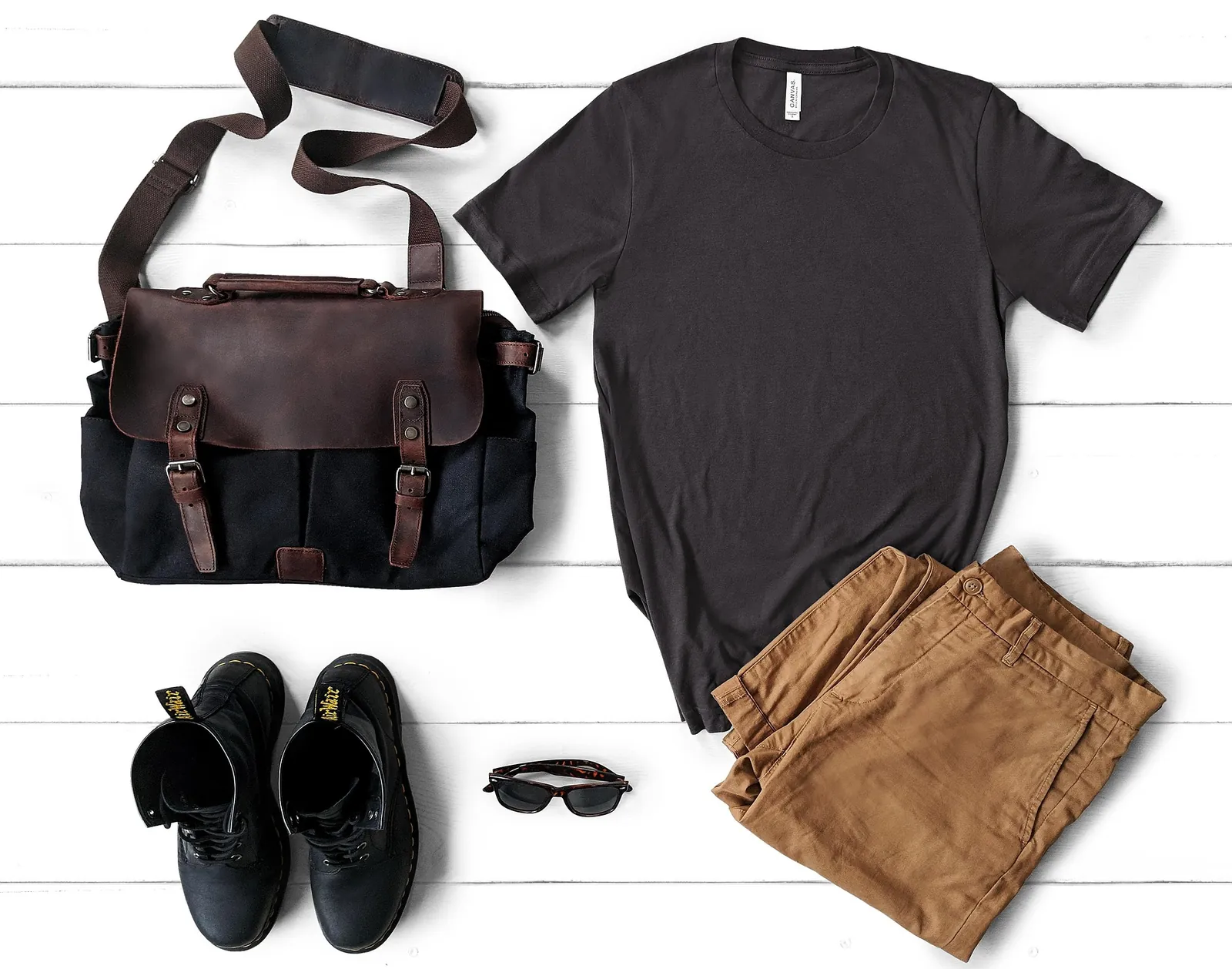
What "blank" excludes
Blank means no print, no embroidery and no brand of ours on it. You are buying the garment before decoration, which is the only stage where you have full control of cost: a blank at three dollars and a blank at nine dollars are both "a t-shirt" and the difference decides whether your retail price works.
It also means the shirt must be sellable as a garment on its own. Neck rib recovery, side seams, hem stitching and shrinkage are not marketing details on a blank — they are the things a customer notices before they notice your design.
The four decisions, in the order they change the price
Weight first. Fabric is 45–55% of the cost of a blank, so moving from 180gsm to 300gsm is not a detail, it is a different product. Everything else follows from it.
Knit and construction second: tubular body versus side-seamed, single versus double needle hems, and the neck rib all move the price by cents that add up over a run.
Colour third. Stock colours are cheap; a custom dye lot has a minimum that is usually larger than a first order.
Size run last, and it is where buyers lose money. Extended sizes cost more per piece, and a curve that is wrong strands stock.
What we hold right now
Twenty-two styles in two locations: 12 in a US warehouse shipping domestically from 100 pieces, and 10 in a China warehouse sold FOB. Weights run 160 to 350gsm in 176 colourways, from $3.00 a piece at the top quantity tier.
The US stock is priced against US distributors, not against a Chinese FOB quote, because that is what the buyer is comparing it to. The China stock is priced FOB and says so on the page — freight and duty are quoted separately, and the two should never be compared side by side without adding them.
How to choose without overthinking it
If you are printing one to four spot colours and selling a general retail tee, 200–230gsm is the answer and it is not close. If the design is the product — streetwear, oversized, garment-dyed — go heavier. If the shirt is a giveaway, go lighter and buy more.
Then decide the route: US stock if the deadline is weeks, China FOB if it is months and the volume is real. Our guide to the route decision is in Start Here.